
Translate the label into a physical arrangement
A general-admission ticket may cover a standing floor, an unreserved seated area, a lawn or another defined zone. The event description must explain which. Ticketmaster’s help page distinguishes unreserved seating and standing arrangements rather than treating GA as a single physical product.1 Read the zone name and event notes together.
A number printed on a GA ticket can be used for inventory rather than a promised chair, so do not build the evening around a row-and-seat code without confirming its meaning. If the listing is unclear, ask the seller or venue before purchase. The most useful first question is simple: “What does this ticket give me a place in?” Once that is answered, you can assess whether the experience suits your needs and whether a reserved alternative would be a better fit.
A real dance-hall example shows why assumptions fail
Gruene Hall’s FAQ says admission does not guarantee seating or dance space and that most ticketed shows are standing unless otherwise indicated.2 That is a specific current example, not a rule for every dance hall. A photograph of tables in the room does not override the ticketed event’s arrangement.
The practical lesson is to separate what exists in a building from what your ticket reserves. A bench may be present but unassigned; a dance floor may fill with listeners; an outdoor area may have different access conditions. If sitting is necessary, obtain a clear answer about an appropriate option. Arriving earlier can change the range of unreserved places available, but it cannot turn an unguaranteed seat into a guaranteed one. The venue comparison helps explain why room type and admission type need separate checks.
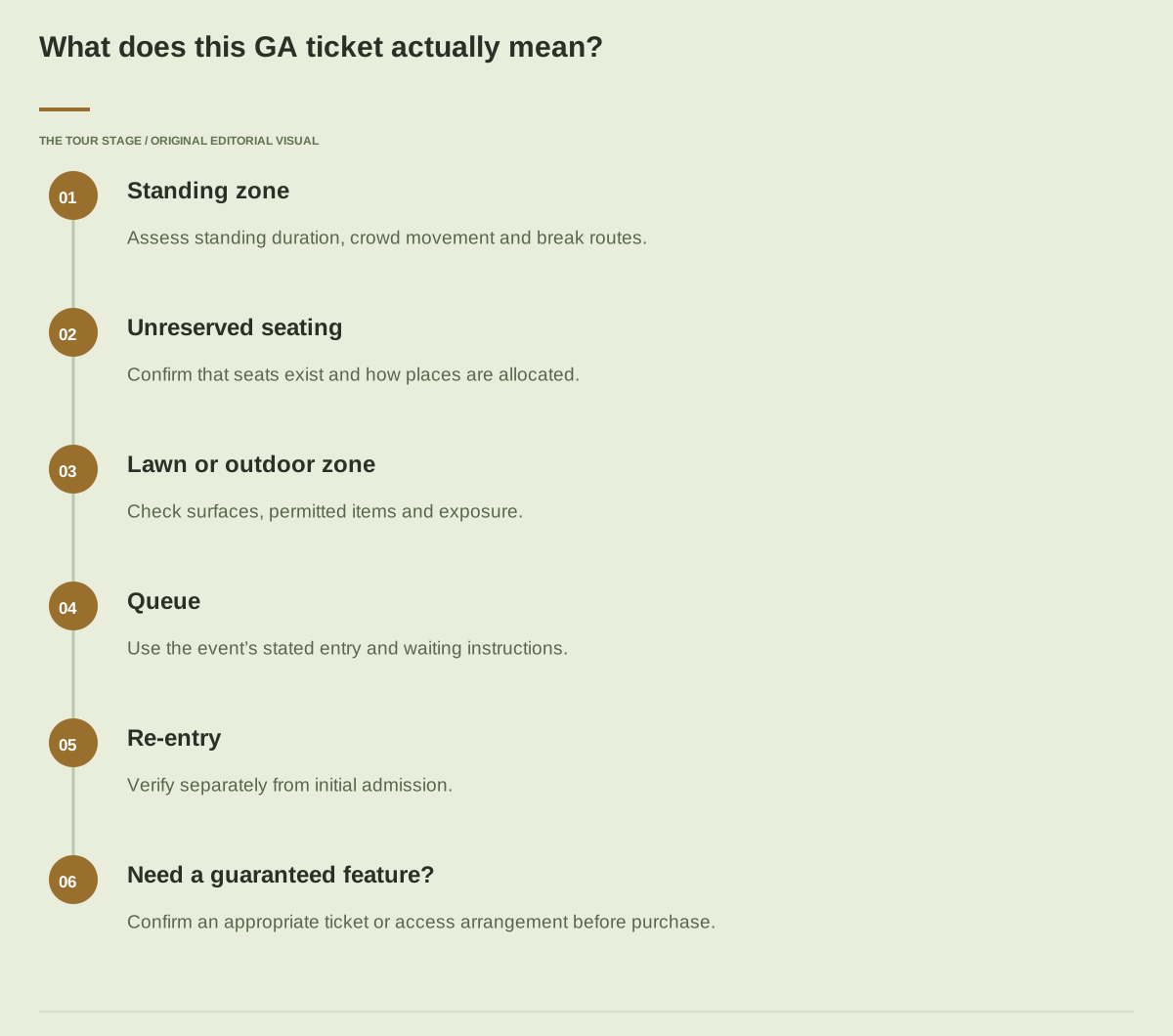
What does this GA ticket actually mean?
- Standing zoneAssess standing duration, crowd movement and break routes.
- Unreserved seatingConfirm that seats exist and how places are allocated.
- Lawn or outdoor zoneCheck surfaces, permitted items and exposure.
- QueueUse the event’s stated entry and waiting instructions.
- Re-entryVerify separately from initial admission.
- Need a guaranteed feature?Confirm an appropriate ticket or access arrangement before purchase.
Read the visual as text
- Standing zoneAssess standing duration, crowd movement and break routes.
- Unreserved seatingConfirm that seats exist and how places are allocated.
- Lawn or outdoor zoneCheck surfaces, permitted items and exposure.
- QueueUse the event’s stated entry and waiting instructions.
- Re-entryVerify separately from initial admission.
- Need a guaranteed feature?Confirm an appropriate ticket or access arrangement before purchase.
Queuing starts with official instructions
Some events publish queue locations, opening times or rules about holding places. Others do not. Use the current event information and follow staff directions on arrival. A social-media claim that fans always line up at a certain entrance is not enough to establish permission for this performance. Avoid promising yourself a front position based on an arrival time from another city.
Think about what waiting involves for you: weather, restroom access, food, standing and transport. A long queue is part of the physical experience, not an invisible cost outside the ticket price. If you want to hear Koe Wetzel, Treaty Oak Revival or Wyatt Flores, use the bill and venue instructions for that show. Their inclusion here illustrates different listening choices, not a claim that all of their performances use GA.
Entry and re-entry are different permissions
Being admitted once does not automatically mean you can leave and return. Bridgestone Arena’s published policies, for example, include a no-re-entry policy.3 Other venues and events may differ. Check the rule before using a plan that depends on returning to a car, eating elsewhere or taking a break outside the ticketed boundary.
Also identify whether your ticket covers the whole floor or a particular pit, enclosure or lawn. A wristband may help staff identify access at one event, but you should not assume every show uses one or that all bands mean the same thing. Keep the ticket available after the entrance scan in case staff need to confirm your zone. A smooth first entry is only one part of understanding the boundaries of your admission.
Choose a position that works for the whole set
A position close to the stage can feel exciting, but it may involve more crowd movement and a less convenient route for a break. A little farther back can offer room to adjust and a clearer overall stage view. These are general physical considerations, not a promise about density or behaviour in a particular location. Look around after entry and assess the actual conditions.
Decide what matters most before becoming attached to one spot. If you need a predictable place to sit, GA standing may simply be the wrong product. If you want freedom to move within a permitted zone, it may suit you well. Do not treat remaining in an uncomfortable position as a test of dedication. Ask staff for assistance with a problem and follow their directions. The accessibility guide helps frame pre-booking questions where the standard arrangement does not meet your needs.
Coordinate the group without making the crowd responsible
Agree on a meeting point and a plan for separate arrivals. In an unreserved area, a group cannot assume it can preserve a large empty space for latecomers. The venue’s own queue and conduct rules control what is permitted. Decide whether staying together or finding the closest available position matters more, because those goals may conflict.
Keep communication simple. Share the section or zone name, a recognisable meeting place and the time at which you will reassess if someone is delayed. Transfer tickets through the provider where permitted if people need independent entry; do not circulate a screenshot as a universal solution. The mobile-ticket explainer covers that process. During the music, move considerately and avoid blocking routes. A workable group plan reduces the need to negotiate logistics through a crowded floor while a support act is playing.
A booking decision in five questions
Before buying, answer these questions in plain language: standing or seated; which zone; what queue instructions; what re-entry rule; and what arrangement meets your physical needs? Add the final journey home so an open-ended queue does not consume the time you need for transport. Keep unresolved questions attached to the booking decision until they are answered.
General admission can be an excellent way to hear a band when its flexibility is part of the attraction. It is less enjoyable when the label disguises an assumption about a chair, a view or entry privileges. Use the full concert-planning guide for the rest of the evening. The aim is not to optimise a mythical perfect position. It is to buy an admission arrangement you understand and arrive prepared to enjoy the actual room.
Sources & further reading
- Ticketmaster: general admissionProvider distinction between unreserved seated and standing admission.
- Gruene Hall FAQGeneral admission does not guarantee a seat or dance space.
- Bridgestone Arena visitor policiesCurrent venue visitor conditions including re-entry and stroller restrictions.