Five artists, five uses of familiar tools
This November 2026 editorial selection uses established releases as entry points; new means a newer generation in a long tradition, not a promise that every record was released this month. Jake Worthington, Zach Top, Braxton Keith, Drake Milligan and Randall King can share audiences without sharing a single vocal method. A steel guitar or a cowboy hat is insufficient evidence for a useful comparison. Listen instead to the attack of a consonant, the placement of a phrase against the beat, the shape of the bass line and the space left for an instrumental answer. The matrix accompanying this guide uses descriptive editorial categories. It does not score authenticity or pretend to measure a singer’s traditional-country percentage.
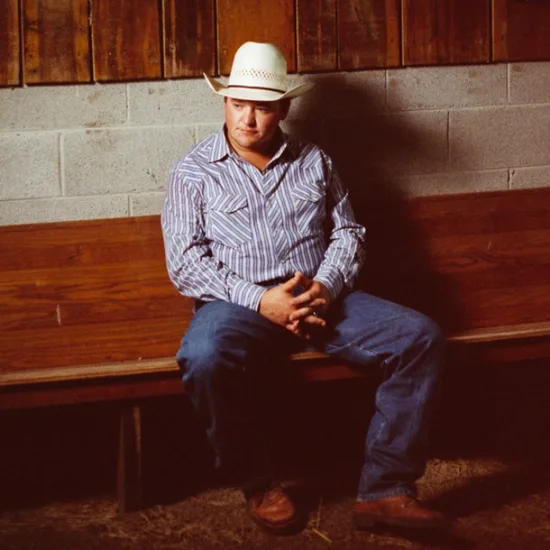
Jake Worthington: weight, patience and honky-tonk phrasing
Start with Jake Worthington’s self-titled 2023 album, then contrast it with When I Write the Song. His official Big Loud material confirms the latter as a released project, so it is a concrete catalogue choice rather than a prediction. Listen to the way he gives a phrase weight without rushing its ending. The vocal’s bends and held notes can make a modest line feel substantial, especially when steel and fiddle have room to respond. Compare a quicker track with a ballad before deciding that power means singing loudly. A patient entrance or a slightly delayed word can change the emotional balance of the whole verse. Worthington is a strong starting point when you want to hear the singer and band negotiate space.1
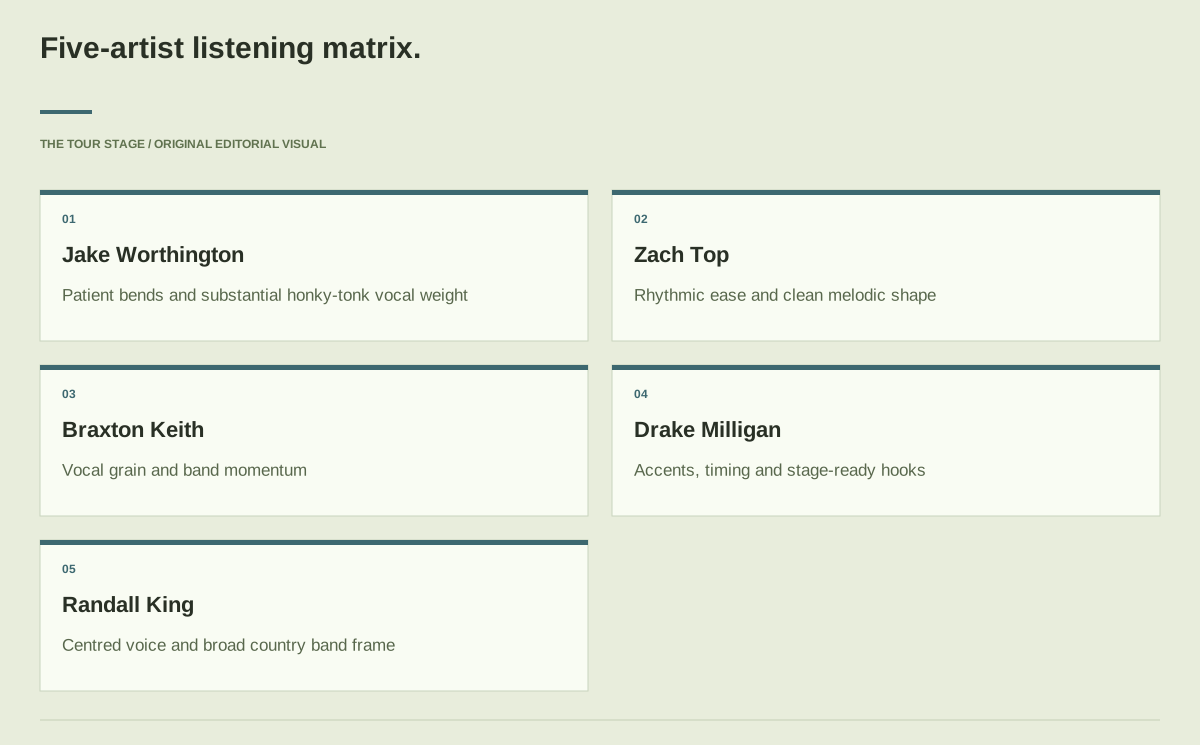
Five-artist listening matrix.
- Jake WorthingtonPatient bends and substantial honky-tonk vocal weight
- Zach TopRhythmic ease and clean melodic shape
- Braxton KeithVocal grain and band momentum
- Drake MilliganAccents, timing and stage-ready hooks
- Randall KingCentred voice and broad country band frame
Read the visual as text
- Jake WorthingtonPatient bends and substantial honky-tonk vocal weight
- Zach TopRhythmic ease and clean melodic shape
- Braxton KeithVocal grain and band momentum
- Drake MilliganAccents, timing and stage-ready hooks
- Randall KingCentred voice and broad country band frame
Zach Top: rhythmic ease and a clean melodic line
For Zach Top, use Cold Beer & Country Music and move between “Sounds Like the Radio,” “I Never Lie” and “Use Me.” Leo33’s official material confirms the record and its songs. The contrast between brisk energy, dry humour and a more exposed emotional line is more revealing than simply identifying a 1990s influence. Hear how the vocal stays legible while the rhythm moves underneath it. The clean melodic outline gives instrumental fills something clear to answer. Top’s bluegrass background is a documented connection, but do not assume every country track contains a bluegrass arrangement. The Me & Billy collaboration with Billy Strings gives an especially useful comparison because familiar material is reframed through another instrumental and vocal partnership.2
Braxton Keith: a band-ready edge
Braxton Keith brings a different kind of edge to the session. Start with “A Little Bit Closer” and the Blue EP, then check his official catalogue for the exact version you are playing. Listen to the grain of the lead voice, the firmness of the rhythm and how the arrangement makes a short melodic hook feel physical. A full-band setting can retain traditional-country instruments while leaning toward a more urgent live-room impression. The useful distinction from Top is not that one is polished and the other unpolished. It is where each recording places its emphasis: the outline of the melody, the attack of the voice, the instrumental texture or the momentum of the band. A second listen should test your first impression rather than simply confirm it.3
Drake Milligan: a showman’s sense of timing
Use Drake Milligan’s Dallas/Fort Worth as the central reference, with “Sounds Like Something I’d Do” as an immediate doorway. A lively delivery can make the song’s rhythmic punctuation as memorable as its melody. Listen to where he clips a phrase, where the band supplies a stop or accent, and how the vocal returns after an instrumental passage. Stage presence is easier to appreciate after hearing that timing on record: it is not an extra costume laid over the music. Compare an official live performance with the studio cut and attend to what expands. The band may extend a transition or allow more audience response, while the central hook still has to arrive convincingly. His official site remains the authority for the release catalogue.4
Randall King: a centred voice in a neon-lit band frame
Randall King’s Into the Neon provides the fifth angle. His official artist material names the 2024 album and its steel-and-country-groove setting. “You in a Honky Tonk” is another established entry point into his catalogue. Listen to the relative steadiness of the vocal centre and the way the arrangement can create breadth around it. Rather than chasing every instrumental flourish, follow how a verse prepares the chorus and how a held note resolves. Compared with Worthington’s weightier bends or Milligan’s emphatic timing, King can make a straightforward melodic line feel like the main attraction. Those are listening impressions tied to recordings, not permanent limits on what any singer can do across a live set or a developing catalogue.5
Make the comparison fair
Do not compare one artist’s quiet acoustic video with another’s loudest studio single and conclude you have isolated their essential sound. Match a ballad with a ballad, then compare two quicker band tracks. Keep playback volume reasonably consistent, since loudness can disguise arrangement differences. Listen once for voice, once for the pulse and once for the fills. If you hear steel, ask whether it sustains harmony or carries a recognisable melodic answer. If a song swings, notice whether the vocal reinforces that movement or floats against it. The Bakersfield guide provides a historical comparison, while Texas dance halls explains why a dependable groove matters to people using a floor rather than merely analysing it.
Choose the next record, not a winner
If Worthington’s patient phrasing holds you, stay with a full album and hear the contrasts around it. If Top’s rhythmic clarity is the attraction, compare his band recordings with the Strings collaboration. If Keith’s attack works for you, follow that into his wider catalogue. Milligan rewards watching a complete official performance; King rewards hearing the sequencing and dynamic range of an album. You do not need to eliminate four artists to understand your preference. The choose-your-sound finder offers another starting route, but the final evidence is a complete recording. A traditional vocabulary remains interesting because musicians make individual decisions inside it. The best starter kit gives you ears for those decisions rather than handing you a league table.
Sources & further reading
- Jake Worthington: Big LoudReleased albums and official artist catalogue.
- Leo33: Zach Top releasesCold Beer & Country Music and follow-up release information.
- Braxton Keith official websiteOfficial recordings and performance videos.
- Drake Milligan official websiteOfficial catalogue and performance entry point.
- Randall King official websiteInto the Neon and established recordings.