The map shows functions, not fixed seating
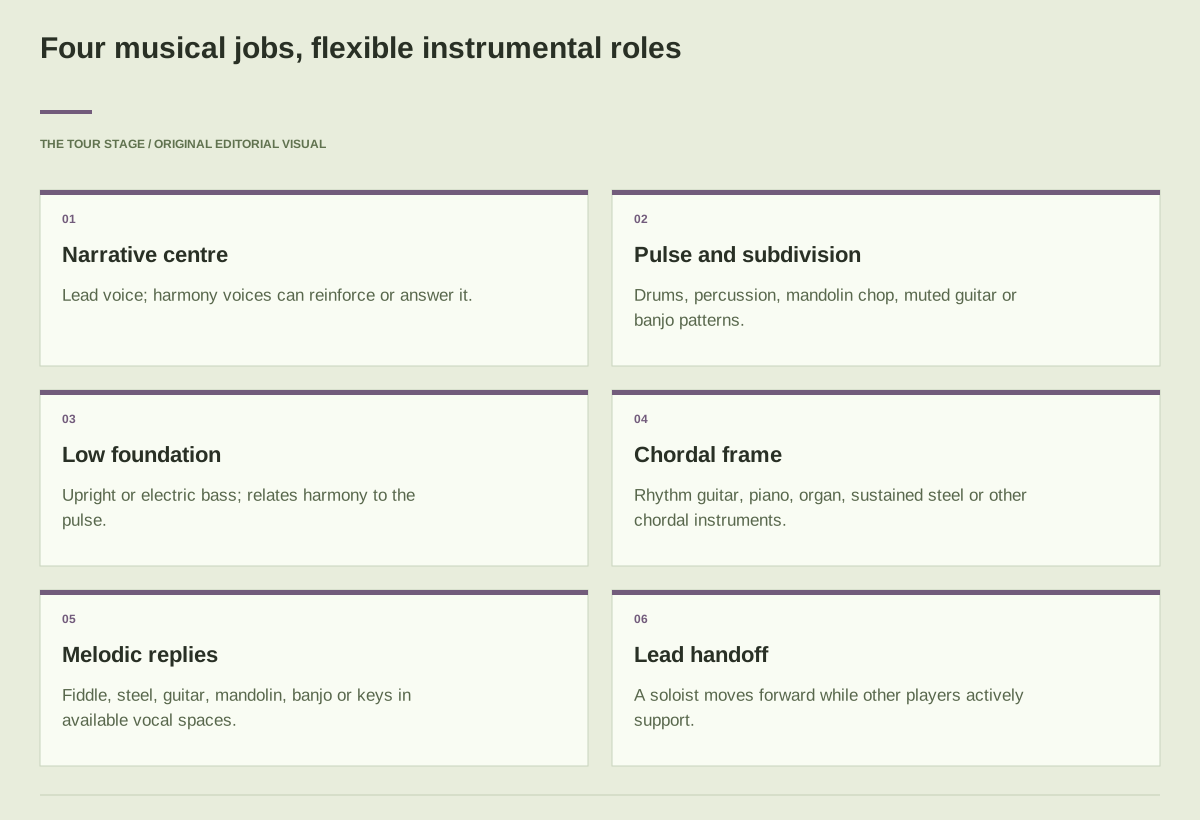
Lead vocals, rhythm, bass and melodic responses can be distributed among several instruments. A guitar may strum in one passage and take a solo in the next; a fiddle may sustain harmony before moving into a sharply articulated hook. The diagram groups those jobs so you can recognise a change of role as a song unfolds. It is not a mandatory stage plot. Monitor placement, microphones, accessibility, sightlines and the size of a production can all change where people stand. For historical context, the museum’s instrument resource introduces several of country’s recurring sounds.1 Use the labels to guide your ears, then read the actual album credits to identify performers. A sound you recognise is not enough to name the person who played it.
The foundation: bass and the shape of time
Bass connects rhythm with harmony. A low note can make a chord change feel settled, lead into the next phrase or emphasise a pulse shared with drums. In a bluegrass setting, an upright bass often makes the underlying beat clear while other instruments create a faster surface. An electric-country arrangement may join bass and kick drum into a more forceful physical pattern. Neither approach is inherently simpler. Listen to a verse while following only the lowest pitched part, then hear how the chorus changes its activity. Does it hold the same pattern or begin moving? The rhythm-section guide goes deeper into that relationship. The important map connection is bass-to-ensemble: the part supports the whole song, not just the instrument placed nearest it on stage.
Four musical jobs, flexible instrumental roles
- Narrative centreLead voice; harmony voices can reinforce or answer it.
- Pulse and subdivisionDrums, percussion, mandolin chop, muted guitar or banjo patterns.
- Low foundationUpright or electric bass; relates harmony to the pulse.
- Chordal frameRhythm guitar, piano, organ, sustained steel or other chordal instruments.
- Melodic repliesFiddle, steel, guitar, mandolin, banjo or keys in available vocal spaces.
- Lead handoffA soloist moves forward while other players actively support.
Read the visual as text
- Narrative centreLead voice; harmony voices can reinforce or answer it.
- Pulse and subdivisionDrums, percussion, mandolin chop, muted guitar or banjo patterns.
- Low foundationUpright or electric bass; relates harmony to the pulse.
- Chordal frameRhythm guitar, piano, organ, sustained steel or other chordal instruments.
- Melodic repliesFiddle, steel, guitar, mandolin, banjo or keys in available vocal spaces.
- Lead handoffA soloist moves forward while other players actively support.
Drums and percussion: more than volume
A drum kit can define a backbeat, imply a shuffle, build into a chorus or leave a ballad room to breathe. The absence of a kit does not mean the music lacks percussion: a mandolin chop, muted guitar stroke or the attack of a bass note can provide rhythmic punctuation. Conversely, a recording with drums can still feel restrained. Ask which sound marks the main pulse and which creates subdivision. A snare accent may be the most obvious event, but a quieter repeated pattern can determine the groove. This is why “acoustic versus amplified” is an incomplete description of rhythm. The bluegrass comparison explains the ensemble approach, while this map lets you follow how the same musical job moves between instruments.
Guitars can occupy several regions at once
Rhythm guitar supplies repeated chord shapes and attack; a lead guitar can answer the singer, state a hook or take a foreground break. Acoustic and electric describe broad ways the instrument produces and projects sound, not exclusive musical jobs. A softly played electric part may leave more space than a dense acoustic strum. In Ben Gallaher’s guitar-led country setting, listen for the difference between the part carrying the pulse and the part drawing attention. Do not assign both to one visible performer without a credit or documented live view. The flatpicking guide and guitar-tone comparison separate technique from texture. On the map, guitars therefore connect both to the rhythmic foundation and to the melodic foreground.
Fiddle and steel: sustained notes, different mechanisms
A fiddle uses a bow to sustain and shape a note, while pedal steel combines a bar, strings and pitch-changing mechanisms that can create moving harmonies. Both can answer a singer, but their attacks and transitions are different. Hear the opening and ending of a note rather than just recognising a sliding sound. The museum’s instrument history provides the physical background; its Lloyd Green profile supplies a specific player and recording context.12 A sustained fill may sound simple while carefully avoiding the vocal’s next entrance. The pedal-steel guide and fiddle guide explain those separate traditions. Also distinguish pedal steel from a resonator guitar: a related sliding vocabulary does not make the instruments identical.
Mandolin and banjo: hear support as well as solos
A mandolin can make a brief, percussive chord sound or carry a clear melodic line. A banjo’s repeated picked notes can create continuous motion while changing the emphasis inside a beat. In Sierra Hull’s music, the mandolin is also a vehicle for writing and arranging across different textures; her label’s 25 Trips notes document that wider palette.3 For a more traditional ensemble comparison, the Del McCoury Band’s official biographies identify Ronnie on mandolin and Rob on banjo.4 The distinction helps you hear the instruments without reducing either player to a single technique. Follow what happens when another musician takes the break: the lead instrument normally returns to accompaniment, and its supportive choices remain active musical work.
Voices and keyboards fill different kinds of space
A harmony voice can follow the lead’s words, sustain underneath them or enter only at a decisive point. A keyboard can support harmony, add a repeated figure or create a contrasting tone; it should not automatically be described as background. Alison Krauss is a useful listening route into the relationship between a clear central voice and the surrounding instrumental space. First hear a whole performance, then follow one accompanying line. A crowded texture is not necessarily bad, but a listener should be able to explain what its density contributes. On the map, the vocal occupies the narrative centre while other roles can move toward or away from it. That is an interpretive model, not a declaration that every song must have a sung lead.
Three ensemble shapes to compare
Try a five-piece acoustic string-band recording, a steel-and-fiddle country recording and a guitar-driven country-rock track. Make a short note of who supplies pulse, chordal support, bass and melodic replies in each. Some instruments will serve two functions; some functions will be shared. Then read the personnel and replace instrument labels with verified player names where possible. This turns a simple diagram into proper credit awareness. The band identity guide distinguishes members from session and touring players, and the album case study shows how one project can alter its instrumental balance from track to track. What matters is not how many instruments appear. It is how the musicians distribute attention and make the arrangement serve the song.
Sources & further reading
- Museum: country instrument historiesInstrument mechanisms and historical context.
- Museum: Lloyd GreenNamed pedal-steel player and credited recordings.
- Concord: Sierra Hull 25 TripsMandolin and wider recording textures.
- Del McCoury Band biographiesRonnie mandolin and Rob banjo roles.